Testimonials
 Contact Us
 FAQ
FAQ


As this drought becomes more and more of a reality in the Bay Area some people are taking leaking swimming pools into account in their water conservation decisions. More and more of our customers are saying this is one of the main reasons they are removing their swimming pools. David Louis discusses some of the water concerns with my customer and I at one of our jobsites in Palo Alto.
3112 Comments Click here to read/write comments
Tags: remove pool, remove swimming pool, Swimming Pool Backfill, cost to remove a swimming pool, cost to remove pool, swimming pool demolition cost, how to remove pool, backfill pool, safe pool removal, Swimming Pool Removal, demolish pool, pool demolition, swimming pool removal vs. repair, pool removal, Swimming Pool Demolition, swimming Pool removal cost, save money remove pool
 So, you have finally decided to take the plunge and dive-in head first into your swimming pool removal. Suddenly, you are faced with a whole new set of questions. How will your pool removal be handled? Most cities allow a partial collapse and fill, where others require a full removal of all concrete and rebar and then backfilled under the supervision of a licensed Geotechnical soils engineer. There are many options that fall between these two ends of the spectrum and I will do my best to describe each techniques and the pros and cons of each.
The Partial Removal and Non-Engineered Fill (Sides Broken down)
The process:
This is the most common type of removal that we see. This technique involves punching holes in the bottom of the swimming pool, breaking the sides (bond beam) down 18"-36" from grade and then backfilling and compacting with no engineering oversight.
Suitable future use:
Most cities will consider the area of the former pool non-buildable (no additions or dwellings) but the area will be perfectly acceptable for landscaping, sheds, concrete, plants or trees.
Advantages:
The main advantage to this type of pool removal is cost savings and the speed at which it can be removed (2-5 days)
Disadvantages:
There are a few disadvantages to this technique. The main disadvantage is that it will be something you will have to disclose to future buyers of the property and could affect the value of your home becasue it is considered non-buildable. On the other hand, you should check with the city building depatment and see what the property setbacks are to see whether it is a buildable area in the first place.
Another disadvantage is that if someday someone wanted to install a new swimming pool the old one would have to be dug up, broken out, recompacted and re-dug to the shape of the new pool. Also, if this technique is performed incorrectly you may have an increased chance of sinkage, swelling, or a lack of proper seepage. Refer to How to hire a contractor blog to make sure your contractor measures up.
Partial Removal and Engineered Fill
The Process:
This technique is the same as above except that the backfill would be monitored by an engineer technician who would perform density testing during backfill and then submit a senior engineer letter. This technique is typically only used when required by the city but if you are unsure of your contractors abilities it might be a good idea.
Suitable future use:
Most cities will consider the area of the former pool non-buildable (no additions or dwellings) but the area will be perfectly acceptable for landscaping, sheds, concrete, plants or trees.
Advantages:
The advantages to this type of pool removal is cost savings and the speed at which it can be removed (4-5 days). Another advantage would be that you have verification that the area has been properly compacted.
Disadvantages:
There are a few disadvantages to this technique. The main disadvantage is that it will be something you will have to disclose to future buyers of the property and could affect the value of your home becasue it is considered non-buildable. On the other hand, you should check with the city building depatment and see what the property setbacks are to see whether it is a buildable area in the first place.
Another disadvantage is that if someday someone wanted to install a new swimming pool the old one would have to be dug up, broken out, recompacted and re-dug to the shape of the new pool.
Full Removal with Non-Engineered backfill
The Process:
All concrete (Gunnite), fiberglass, liner, re-bar, etc. is removed from pool cavity and hauled off-site. The area is filled and compacted.
Suitable future use:
Most cities will consider the area of the former pool non-buildable (no additions or dwellings) but the area will be perfectly acceptable for landscaping, sheds, concrete, plants, trees or new swimming pool.
Advantages:
When you sell your home your disclosure will state that the entire pool was removed which may have less impact than if you had performed a partial removal. If your property setbacks would not allow building in the area regardless of the former pool there should be little or no impact on home value. Another advantage of removing the entire pool is that with no concrete burried in the pool it leaves less room for error in the backfill process. If a contractor doesn't know how to properly layer the concrete chunks during backfill it can leave air spaces that over time can cause sinkage in the former pool area. This process also eliminates any concerns of seepage as with the partial removal. In my opinion, if you are going to go through the expense and effort of a full removal it is usually worth it the spend the extra money to have it engineered. The cost is typically about 10% more.
Full Removal with Engineered Backfill
The Process:
All concrete (Gunnite), fiberglass, liner, re-bar, etc. is removed from pool cavity and hauled off-site. The area is filled and compacted. Provide a demolition and compaction plan wet stamped by a state licensed Engineer, perform density testing and oversight during backfill, and submit a final engineer review declaring the area "buildable"
Advantages:
Although this is the most expensive option, it is the absolute best process. In the eyes of real estate and building departments it is as if the pool never existed.
Disadvantage:
Cost
This should give you an overall idea of your options. Keep in mind that there are some variations in between these that may fit your special situation. I tried to simplify "the process" just to give you an idea of what would be done in each scenario but I would be happy to talk to you in more depth about our specialized process for removing swimming pools. I hope you find this helpful and I wish you the best on your upcoming project!
 Ryan Crownholm
925-933-4448
http://www.ihatemyswimmingpool.com/
9131 Comments Click here to read/write comments
Tags: Swimming Pool Backfill, cost to remove a swimming pool, Swimming Pool Removal, Swimming Pool Demolition
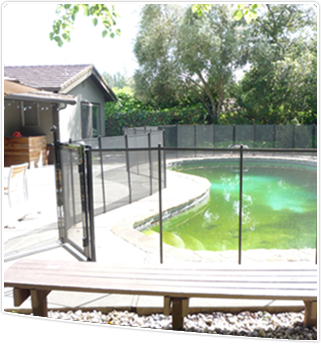 This is one of the most common questions I get from clients that are undecided on whether or not to remove their pool. I am by no means a real estate professional but I have read several articles on this topic and have seen the effects that removing a pool can have on selling a property first hand. Here is my attempt to answer that question... Most people would like to have a definitive answer regarding this question. Unfortunately, like many other factors in real estate, it depends. Below are some of the issues I have seen that affected property value in relation to swimming pools.
This is a list of factors that may have a flat or negative effect on your home's value.
- If the pool takes up 30% or more of the backyard.
- If the pool is over 30 years old and is in need of repair
- If the pool does not have a safety gate around it.
- If the pool is made from a vinyl liner.
- If the geographic area the pool is in has less than 3 months of "swimming weather"
- If the pool is the only one in the neighborhood.
- If your area is currently experiencing a drought
This is a list of factors that may have a positive effect on your homes value.
- The pool is less than 15 years old.
- The pool takes up less than 10% of your backyard.
- Most of your neighbors have pools.
- The pool equipment is relatively new and energy efficient.
- The geographic area the pool is in has more than 6 months of "swimming weather"
- The pool is completely enclosed by a safety gate.
- If your home is considered a "luxury home"
Supply and Demand:
The current economic downturn has reduced the pool of buyers substatially over the past couple of years. According to real estate professionals the best way to get offers on your home is to appeal to as many possible buyers as possible. In general, most families that do not want a swimming pool are less likely to look at a home that has one due to the cost of removal. Whereas, a family that does want a swimming pool will likely look at homes that have existing swimming pools or enough space to install one. Another factor to keep in mind is that if you have a swimming pool and are selling your house, it may benefit you to sell during the summer time when swimming pools are the most attractive to buyers.
Repair or Removal:
If your pool is in need of repair and you are selling your house these are some suggestions that may be helpful.
- Talk to your real estate agent and ask their professional opinion on the effect of having a swimming pool on your property.
- Review the above list of positives and negatives and see which you fall into.
- Get 3 estimates on repairing your pool.
- Get 3 estimates on removing your pool.
- Compare the middle 2 estimates of removing compared to repairing and figure the difference.
Example where repair would be the appropriate action:
Base home value: $500,000 Value added for pool: 3%= $15,000
Cost of Removal: $10,000
Cost of Repair: $12,000
If Repaired the total value would be $503,000 (500,000+15,000-12,000)
If Removed the total value would be $490,000 (500,000-10,000)
Example where removal would be the appropriate action.
Base home value: $500,000 Value added for pool: -2%= (-$10,000)
Cost of Removal: $9,000
Cost of Repair: $7,000
If repaired the total value would be $483,000 (500,000-10,000-7,000)
If removed the total value would be $491,000 (500,000-9,000)
Other factors such as landscaping and time factors such as maintenance and mortgage should also be taken into account.
Personal Experience
A large portion of pools that I have removed are related to real estate transactions. Here are a couple of examples that I have experienced after removing swimming pools.
- A home in Moraga was on the market for 6 months, prospective buyers generally felt the same about the pool, that it was poorly placed and undesireable. I removed the pool and the house was in escrow within 2 weeks.
- A home in Walnut Creek where the owners needed to move for work purposes was unable to sell their house because of the decreased value due to the real estate slump. In order to rent the home the insurance company wanted to increase the premium drastically and install a gate that was going to cost $3,500. In addition, several renters expressed hesitation due to the pool and the homeowners would be responsible for maintenance and repair. They decided the best course of action was to remove the pool. The homeowners had far more interest from potential renters once the pool was removed. The majority of the applicants had children and wanted to be in the Walnut Creek school district but didn't want the hazards or liability of a pool.
- An elderly couple in Danville had lived in their home for 40 years. They enjoyed their swimming pool for years but the cost had gotten so high for maintenance that they were considering selling their house and buying one without a pool. The equipment was over 30 years old and very inefficient and they had to pay a maintenance company $120/month to clean it. The total cost monthly was $250. They had never even considered removing the pool until their real estate agent introduced me to them. I removed their pool and they were able to stay in the home that they loved so much.
If you ever have any real estate questions relating to you swimming pool please call me. I would be happy to refer you to a professional real estate agent in your area. The above article is based on my practical experience in the industry and I hope you find it helpful.
Ryan Crownholm
Dig & Demo
General Engineering Contractor
925-We-Dig-It
925-933-4448
www.IHateMySwimmingPool.com
7425 Comments Click here to read/write comments
Tags: Swimming pool effect on value of home, swimming pool removal vs. repair
OK, so you know that we remove LOTS of swimming pools by now. But do you know how we do it? With our many years of experience we have acquired a fleet of equipment that is designed with your swimming pool demolition in mind.
The Breaking: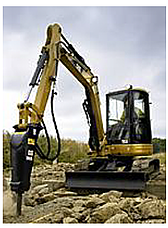 Swimming pools that are made out of concrete or gunnite are often 12" thick and reinforced with rebar. In order to safely and efficiently break this concrete we use and excavator with a Jack Hammer (breaker) attachment. An excavator is ideal because you can
place it in a stationary position and then spin the turret around as you work which places the operator at least 10 feet away from breaking. Some people will try to use a Skid Steer (Bobcat) with a breaker attachment. A warning to do it yourselfers and
inexperienced contractors. This is very dangerous for the operator because the skid steer is not designed to work with a load over head while moving the machine and can cause it to tip over. Also, because the operator is working directly under the work he is in
danger of being hit by falling concrete or rebar. We do not advise using a skid steer for the demolition portion of the project.
Moving the concrete out and the dirt in:
This is where the skid steer comes in. In order to safely move the concrete out of the swimming we send in a bobcat with a grapple attachment to "grab" the material and transport it to the trucks. In order to move the soil into the swimming pool cavity we use the
same skid steer but we switch the bucket out to a smooth bucket which allows us to evenly spread the material. Evenly spreading the material is very important because the compactor needs a perfectly level surface in order to achieve uniformity. This machine
also allows us to set the final grade to the customer specifications
The trucks: Because our soils come from our own sources rather than unknown excavations delivered by other contractors we need a fleet of trucks to handle very large volumes. Our fleet consists of 10 wheel dump trucks and transfers. A transfer is like a 10 wheeler but has
a trailer that carries a second load of soil or up to 22 yards of soil. The average swimming pool requires 130 cubic yards of soil to fill and compact. With our fleet we can easily transport the needed soil in 1-2 days.
Compaction: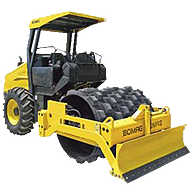
In order to compact soil to 90-95% density it is best to use what is called a padded drum roller or "sheep foot" roller. The machine has a large vibrating drum with "knobs" covering the drum. The purpose of these "knobs" are to essentially knead the soil much like
you would with bread dough to bind the dirt. In rare occasions where we do not have access we use what is called a plate compactor. The plate compactor can be used in much smaller lifts and still be effective to achieve proper density but can take much more
time and requires a great deal of experience. Other misc tools of the pros:
Grinder or cut-off saw to cut the rebar
Transit or Level to set your finish grade
Geotextile filter fabric to prevent soils migration
Storm water run-off protection such as silt sifting bags for EPA compliance
Pressure washer to clean up your property when we are all done.
When it comes to a task as specialized as swimming pool removal it is important to use the proper equipment. The companies that truly "specialize" in swimming pool removal know how important each piece of equipment is to operations. Not only do these
pieces of equipment allow for a safe and proper job but also speed the job along so that we can give your yard back as soon as possible. Most of our projects are completed in 3-5 days.
Take a look here at our process in action!
10844 Comments Click here to read/write comments
Tags: remove pool, Swimming Pool Backfill, cost to remove pool, Swimming pool effect on value of home, swimming pool demolition cost, how to remove pool, equipment used in removing pool, backfill pool, safe pool removal, demolish pool, excavate pool, swimming pool removal vs. repair, pool removal, Swimming Pool Demolition, save money remove pool
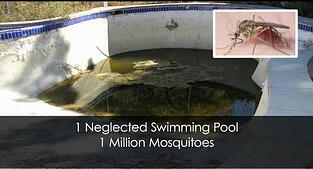
West Nile Virus. If you haven’t heard about it lately, you haven’t been paying attention to  the news, because this year marks the most cases ever reported in the United States since the infection first showed up in 1999.
How many cases are we talking about? Just under 700 people have been diagnosed, and – even worse – 26 have actually died from their symptoms.
How does it keep spreading? And why can’t medical experts seem to get rid of it? This may come as a surprise to you, but the answer might be as close as that unused pool in your backyard.
It might seem strange to blame a swimming pool for a dangerous virus like West Nile, but consider this: the sickness is transferred to humans by mosquitoes. Those same mosquitoes need to lay eggs to continue the species. Where do they do that? In stagnant pools of water. That can mean rain water that accumulates in abandoned car tires, bird baths, small ponds… and unused pools.
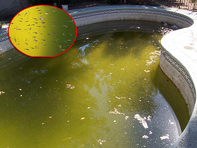
This very thing is what caused that original West Nile outbreak in Queens, New York, in 1999. People had stagnant pools sitting around, and they were perfect incubators for baby mosquitoes.
You could go to the trouble of hiring someone to clean up your old pool and start maintaining it again, but if no one is using it, why would you waste that money? Luckily, there’s a better option out there that will prevent your backyard from becoming a breeding ground for mosquitoes: you can have the pool removed.
Pool removal may seem like a big expense at first, but if you actually calculate how much money you would be spending on maintenance (or the risk you run with West Nile virus by letting it stagnate), you’ll make back that money in no time. Even better, you can finally get your yard back!
Maybe you’ll decide to add a garden. Or a deck or patio. Or maybe you’ll just keep the grass green to give Fido a nice open space to run around in. The point is, if you remove your pool you open yourself up to a lot of options while reducing your monthly costs and protecting yourself from the nasty things that can come from unused, stagnant water like the West Nile virus.
8543 Comments Click here to read/write comments
Tags: remove pool, remove swimming pool, abandoned pool, west nile virus, standing water, Swimming Pool Removal, demolish pool, pool demolition, excavate pool, mosqitoes, swimming pool removal vs. repair, pool removal
If you’re an environmentally-minded person who’s been debating the removal of your pool, consider this: owning a pool impacts the environment in many negative ways. Some of these ways are probably pretty obvious if you think about them for a second, but other you may not have even considered.
Excessive water use. How many areas around the country are either in the middle of a water shortage now or have experienced one in the last few years? Quite a few. With more than 7 million private swimming pools in the U.S., they put a major dent in water conservation. In a place like Arizona, a typical pool can lose up to 6 feet of water each year just from evaporation! Think about all the water it takes to refill that pool and then multiply your numbers to account for the whole country.
Chlorine and other dangerous chemicals. Pools need to be kept clean, but many of the chemicals we use to maintain their cleanliness kill important bacteria and can even harm tiny organisms in the soil near the pool. And unfortunately, water isn’t the only thing evaporating from your pool. These chemicals also get released into the air when the heat evaporates them, an d this contributes to greenhouse gas production. It’s even been found that when chlorine is released into the environment, it can cause deformities in living creatures and reproductive damage.
Energy for heating. If you’ve thought of this one, it’s probably because of all that extra money it costs you to keep a pool heated, but it’s also wasteful at a time when large parts of the country are struggling to cover our basic energy needs. Heating 7 million pools puts a lot of pressure on the system, when that energy might be better used elsewhere.
Erosion. This is one very few people even know about, but swimming pools can cause the land to erode. Why? Because they’re so heavy. In fact, some areas close to coastlines have banned people from installing any more private pools because all of that extra weight has caused the land to sink and water levels to rise. It seems insane to think about, but your pool could actually be causing the coastline to erode at a faster rate.
People have com e up with “solutions” for some of these problems, but there’s nothing that solves everything. Using different, safer chemicals to clean their pool, for example, can help. As can heating the pool with solar covers. But those things don’t offset the damage that can be done by pools, and some “fixes” just cause other problems. For example, saltwater pools have become more popular in recent years as an environmentally-safe alternative to traditional pools, but many people don’t realize that backwash from pools that are treated with salt water pool generators can actually kill their plants and sterilize the soil, which will stop future plants from growing.
The best way to protect the environment – and your wallet – is to have your old pool removed altogether. After the one-time cost of removal, you’ll get your yard back, regain financial freedom, and be able to relax knowing that you’ve done your part to help make your neighborhood cleaner and safer.
If you have any questions regarding the swimming pool removal process.
Feel free to contact me.
2168 Comments Click here to read/write comments
Tags: remove pool, Swimming Pool Backfill, cost to remove a swimming pool, cost to remove pool, Swimming pool effect on value of home, backfill pool, Swimming Pool Removal, demolish pool, pool demolition, excavate pool, swimming pool removal vs. repair, Swimming Pool Demolition, swimming Pool removal cost, save money remove pool
Did you know that keeping and maintaining a pool might be costing you $2,000 to $3,000 a year for an average-size model? Thousands of dollars a year for the rest of your life that might be better spent on traveling, remodeling, or kids’ college expenses. And that’s not even counting any repairs that you’ve had to do over the years.
You’ve been thinking about getting your pool removed, but how do you know if it’s really time? While there’s no one-size-fits-all definitive reason to get rid of an old pool, lots of factors can affect your decision.
The kids are gone. Maybe you bought your pool when your children were little and it seemed worth the investment rather t han joining a swimming club or going to the water park all the time, but now they’ve grown up. What’s the point of keeping an expensive pool when you and your spouse barely use it, and the kids only visit once in a while?
You want to sell. If you’re thinking about selling your home, you might be surprised to learn that having an expensive pool to maintain may actually hurting the value rather than helping it. Especially if the pool is older and hasn’t been maintained in pristine condition. Consult with your realtor to see if they believe they can get you a better offer if the pool is removed.
You have to repair it. Normal maintenance isn’t the only expense involved in keeping a pool. If you ever have to pay for repairs, you might find yourself out thousands. In fact, many people discover that it’s actually less expensive to simply remove the pool than to fix something they’re not getting a lot of us out of.

You want your yard back. Having a pool always seems like a great idea at the time, but after the novelty wears off, many people discover that they simply have an expensive hole in the ground taking up their yard. It’s only usable a few months out of the year, so the rest of the time the pool is just a reminder of the nice yard they used to have.
You want to buy. Not everyone wants a pool, but if you truly love a house with one already built in, that doesn’t mean that you have to give up on it. The cost of pool removal is something that will even out within 2 to 3 years when you consider how much it takes to maintain a pool. Some buyers even negotiate the price down to cover the cost of pool removal.

You want to free up money for your future. The cost of pool removal isn’t insignificant, but it’s a one-time expense and then it’s done. Keeping a pool is like a car payment that never ends. Without a pool to pay for, all that money can go towards allowing you to live the life you want.
Whatever the reason, every year thousands of people come to the decision that keeping and maintaining their pool just isn’t worth it, but they don’t know how to get rid of it. A professional pool removal service can help by making the endeavor fast and easy. All you have to do is sit back and watch while everything is handled – from the demolition, to the backfill, and through the final grade. In as little as a week, you can have your yard back the way you want it and stop worrying about the continuing costs of keeping a pool.
893 Comments Click here to read/write comments
Tags: remove pool, Swimming Pool Backfill, cost to remove a swimming pool, cost to remove pool, Swimming pool effect on value of home, swimming pool demolition cost, backfill pool, Swimming Pool Removal, demolish pool, pool demolition, excavate pool, swimming pool removal vs. repair, pool removal, Swimming Pool Demolition, swimming Pool removal cost, save money remove pool
If you have any questions or would like us to bid on your project; feel free to contact us or get a free estimate for swimming pool removal in the Greater San Francisco Bay Area.
1679 Comments Click here to read/write comments
Tags: remove pool, Swimming Pool Backfill, Swimming Pool Removal, demolish pool, pool demolition, excavate pool, pool removal, Swimming Pool Demolition
At Dig & Demo we like to believe that we do a pretty good job of making sure our clients walk away happy; being Diamond Certified tends to speak for itself. The great part about working hard for our customers is that we have hundreds of references not to mention testimonials. September was a month like any other; we removed pools and made people happy. So what is so special about September? For the first time one of our customers took it upon themselves to write the ultimate testimonial for us in the form of a blog post. They also have some great photos of the project we did for them. Thank You Troi & Steve for the great reference.
Excert from their Post:
"Ryan and his team were pros from beginning to end, and we couldn't be happier with the results! They were fast, neat, careful, efficient, friendly, professional, and competent. Really, they are what every homeowner wants when it comes to big home improvement projects."
Head on over to Don't Steal My Pen to read the entire post!
445 Comments Click here to read/write comments
Remove Your Pool to Sell Your Home
If you’re selling your home in this tough real estate market, it’s likely you’re looking for any opportunity to improve your chances of getting an offer. One thing you may not have considered is removing your pool. After all, it adds value to your home, right? Unfortunately, that’s not always the case. There are many situations where your pool may actually be hurting your chances of making a sale.
Your backyard is small. The general rule of thumb is that your pool should take up 30% or less of the space. If it’s more than that, buyers may be turned off by the fact that they have so little yard space.
Your pool is in need of repair. Is your pool over 30 years old? Then it needs some work! Often, the cost of repairs is actually more than removal, so it’s in your best interest to do a cost comparison of your options.
Your pool has no safety gate. For families with kids, this can be a big issue, not to mention it’s a potential liability. Still, investing in the installation of a fence can be costly, so make sure the pool is an asset before you go through with it.
Your pool is made from a vinyl liner. The average lifespan for a vinyl liner is only 8 to 12 years, so if you’ve been in your home for a while already, it may already have some wear and tear. Also, many people just don’t find these types of pools very attractive.
 You live in a very cold climate. How many months out of the year can you use your pool? Typically buyers feel it isn’t worth the time and effort to maintain the pool year-round if they can only use it for 3 months or less.
Your pool is the only one in the neighborhood. You may think it sets your house apart from the rest of the market, but that may be a bad thing. The market for homes with pools is smaller, so buyers who don’t want one have many other options right in your area.
You live in an area experiencing a drought. When water is being rationed, people look at the large amount of water and just see dollar signs and hassle.
The good news is you’re not stuck with your pool. Before you make the decision, I recommend consulting with a real estate professional who can help you determine exactly how much your pool is adding or detracting from the value of your home. Then you’ll be prepared to do the math and see if pool removal is the right option for you.

2248 Comments Click here to read/write comments